
Solve problems in and around your home.
Start Problem Solver


Aphids or greenfly are small, sap sucking insects that are commonly found on buds and new leaves and stems of roses and other plants.
 Identify the problem
 Aphids, sometimes referred to as greenfly, are small*, soft insects with pear-shaped bodies and long & thin with sharply bent legs. They can be coloured brown, black, yellow, pink or green. Woolly aphids look like cotton wool.
Typically aphids may cause stunted shoots, distorted leaves, wilting, honeydew and sooty mould.
Aphids survive during the cooler winter months and are usually hidden within leaf/flower buds. They multiply rapidly during warmer months in spring or summer. Aphids can be usually found in clusters on young shoots, flower buds or underneath leaves.
Aphids are sap suckers. Sap is the plant´s food, nutrient and water circulation fluid. When aphids or other sap sucking insects suck sap from a plant, the plant is weakened and there is a risk of the insect infecting the plant with disease.
Aphids feed on a variety of plants but mainly feed on soft leaves and shoots (see also root aphids). Because aphids attack the new buds, the resulting leaves and flowers may never open properly; remaining puckered and curled. Most damaging of all, aphids can transmit serious virus and fungal diseases from one plant to another. A particularly bad aphid infestation often leaves a sticky residue of leaking sap on the plant that will grow a sooty mould, an unattractive fungal growth.
*Most aphid species are 1-3 mm in size. However, there are some larger species such as the Giant Willow Aphid which has been found in many parts of New Zealand in the last decade. This aphid is up to 6 mm.
 How to solve the problem
 Prevention
Prevention is better than cure. Protect your roses, ornamentals and other susceptible plants with a Kiwicare Spectrum concentrate before they become infested. Spectrum products protect from fungal disease as well as penetrating the plant and making the sap lethal to sap sucking insects. Both kill aphids rapidly without any leaf burn or marking.
To get rid of aphids follow these steps:
Infestation Control
Ongoing Control
Houseplants
Control Ants and the Sap Sucking Insects they 'Farm' in Trees, Shrubs and Ornamentals
 Did you know?
  Helpful tips
White cotton wool like fluffy 'growth' found on the bark and branches of certain trees and shrubs.
Learn More
The larvae of carrot rust fly eat and damage the roots of carrots, parsnips, turnip, parsley and celery.
Learn More
Citrus tree or lemon tree borer are beetles whose larvae bore into living tree trunks and branches of citrus tre…
Learn More
For natural control of insect pests on all types of houseplants.

Triple action fungicide, insecticide and foliar feed for roses and ornamentals. Controls insects and diseases pl…
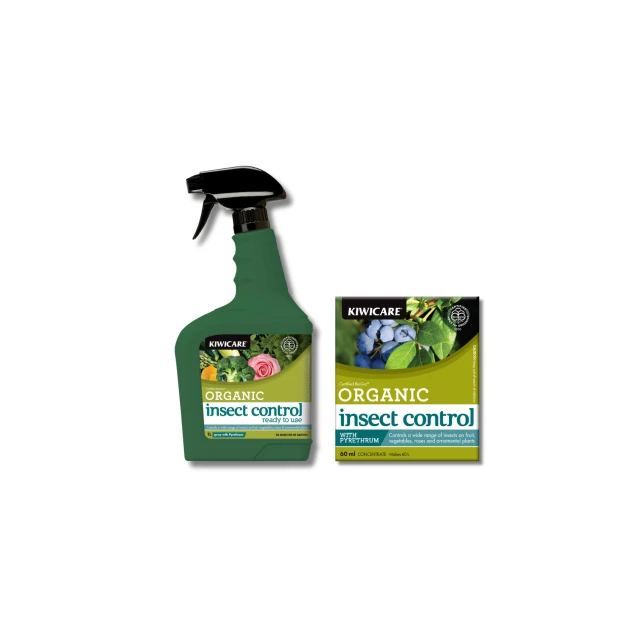
Fast–acting pyrethrum insecticide that controls a wide range of insects in gardens.
 My Favourites (
 My Kiwicare
  Email
Email  Print
Print 