
Solve problems in and around your home.
Start Problem Solver


Psyllids cause a variety of symptoms such as tiny lumps on leaves, distorted shoots and sooty mould. They are also the insect vector of the disease psyllid yellows.
 Identify the problem
 Psyllids are small sap sucking insects usually about the size of aphids. Nymphs have a flat shell like covering.
Psyllids cause a variety of symptoms on plants such as Eugenia and Greselinia hedging and Pittosporum. Symptoms include tiny lumps or dimples on the leaves of the plant, distorted shoots, tip dieback and sooty mould. They can also cause wilting and irregular brown, yellow or orange patches on some ornamentals.
Psyllids are the main vector spreading a bacterial disease that causes psyllid yellows in tomatoes, capsicums and tamarillos and zebra potatoes. The control of this disease is only possible through control of the psyllid insects.
 How to solve the problem
 How to get rid of psyllid follow these steps:
Control Ants and the Sap Sucking Insects they 'Farm' in Trees, Shrubs and Ornamantals
Inspect plants regularly for the presence of psyllids, so that treatments can be applied while numbers are low.
There are no treatments for Psyllid Yellows (the bacterial disease spread by psyllids) available at this time. Control of psyllids is the best way to manage this disease.
Note: The retail product PLANThealth Insect Hit Granules has been discontinued. However, if you have a significant problem a commercial option is still available, please contact Kiwicare directly for more information.
 Did you know?
Red clover mites are often found crawling up the exterior surfaces of houses and other buildings. They are usual…
Learn More
Spider mites are very tiny, usually red, bugs that damage leaves causing yellow speckles.
Learn More
Spider mites are very tiny, usually red, bugs that damage leaves causing yellow speckles.
Learn More
Dual purpose insect and disease control for roses and ornamentals.

Horticultural oil that protects your plants from a range of insect pests and diseases.
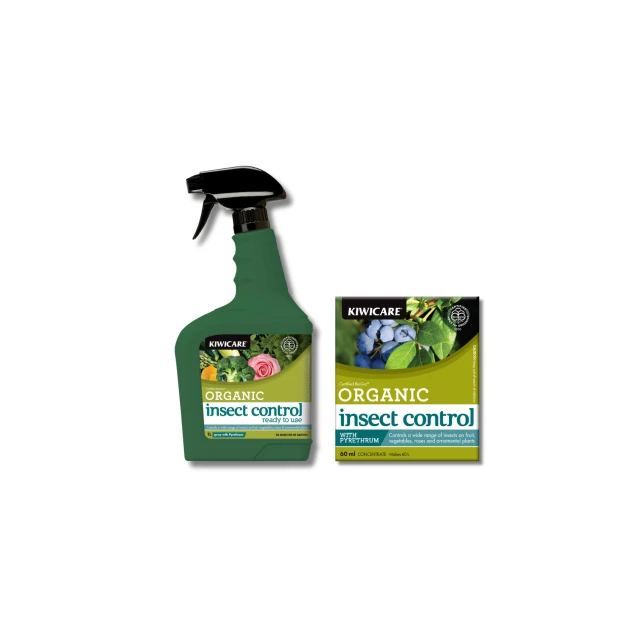
Fast–acting pyrethrum insecticide that controls a wide range of insects in gardens.
 My Favourites (
 My Kiwicare
  Email
Email  Print
Print 