
Solve problems in and around your home.
Start Problem Solver


Blow flies are large flies whose larvae feed on decaying animal material.
 Identify the problem
 Blow flies, including blue bottle and green bottle flies, have shiny metallic looking bodies and are larger than houseflies and are associated with rotten meat and decomposing animal waste where their eggs are laid and the larvae (maggots) feed before pupating and emerging as adult flies.
 How to solve the problem
 To get rid of blow flies follow these steps:
 Did you know?
 The flying insects encountered in urban and industrial premises can be of many types, but it is generally accepted that those which are regarded as pests are those which spread disease through contamination, cause physical damage and general nuisance.
The insects most associated with the spread of disease in domestic, commercial and industrial premises are the true flies including blow flies. There are many thousands of species of fly, however, relatively few interact with humans. Those that do are among the most destructive of pest species, spreading disease to man and domesticated animals, as well as contaminating food.
Adult flies fly; it is this that makes their status as pests so important, allowing them mobility to visit many diverse habitats. By nature, many flies breed and feed in areas of unsanitary conditions, with larvae feeding on decaying organic matter. The adult female blow fly uses complex sensory systems to choose suitable areas of decaying animal matter in which to lay her eggs and for the larval stages to develop into pupae. The adults emerge from the pupae in these unhygienic sites and, as they do, they become contaminated with disease causing organisms. They may fly to sensitive food preparation, processing and consumption areas, seeking feeding sites for themselves as adults.
The likelihood of contamination of human food with pathogens has been demonstrated over the years by a number of experiments. In these, disease-causing agents have been found to survive on outside body surfaces of flies. They also exist in the fly gut and blood system.
Flies are fluid feeders and, although they feed on solids, they need to liquidise the food before they can suck it up. They do this by producing large quantities of saliva from their salivary glands. This is then poured onto the food via the salivary canal of the mouth parts. The flies also frequently vomit some fore gut contents onto the food while feeding. In addition, during the feeding process, flies frequently defecate. This in turn can spread pathogens from the hind gut of the fly onto food and food preparation areas.
If the food on which the flies have been feeding and defecating is prepared for human consumption, human disease and suffering is frequently the result. Food poisoning outbreaks can occur from a minute dose of pathogens and it is common that flying insects spread disease.
Generalised Life Cycle
The complete metamorphosis cycle can be as short as 7 - 9 days in ideal conditions.
Blow flies are in the family Calliphoridae
As of March 2021, according to the World Health Organization, flies are not known to transmit SARS-CoV-2 (the virus that causes COVID-19).
Flies are known to spread disease-causing pathogens such as dysentery, shigellosis, E. coli, salmonella, typhoid, cholera, eye infections, poliomyelitis, diphtheria and many others.
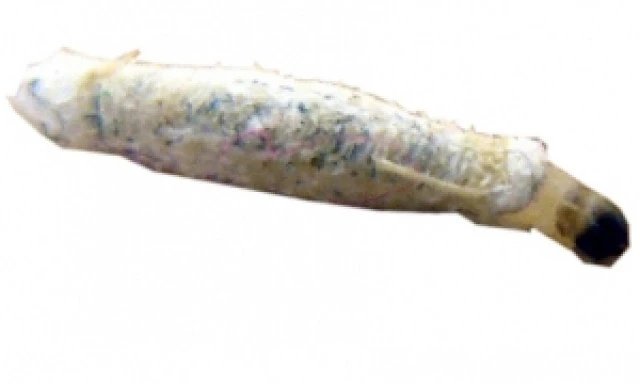
Case moth larvae destroy carpet and other fibrous material using it to cover themselves in a protective case of …
Learn More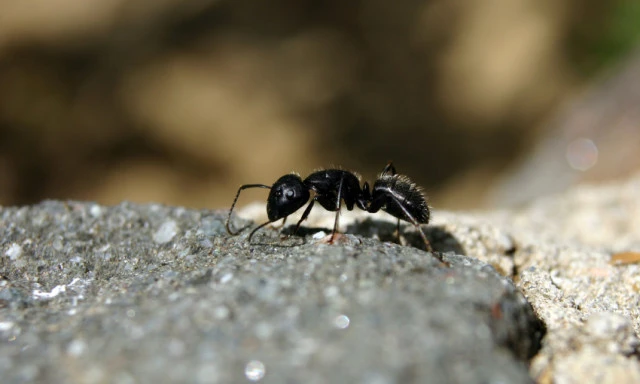
Ants are social insects that can be a considerable nuisance when they enter the home or vehicle, as they can be …
Learn More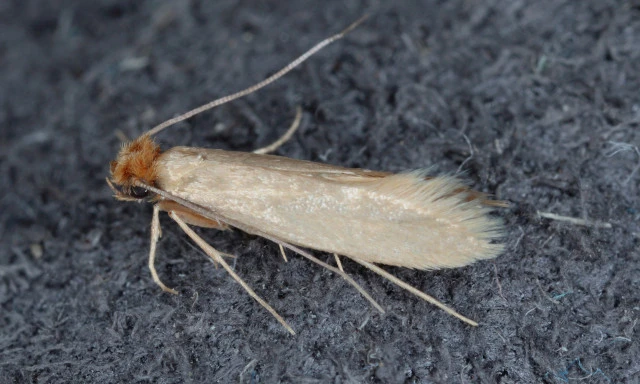
Have you found unexplained holes in your favourite woollen sweater? This may indicate an infestation of clothes …
Learn More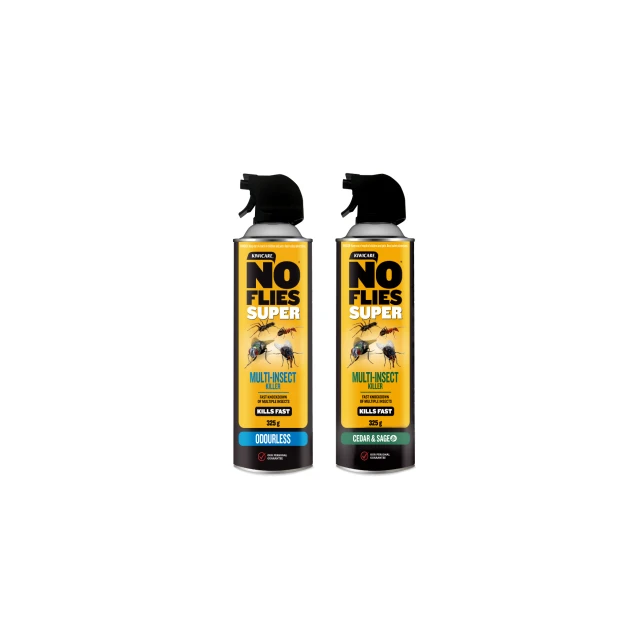
An odourless or scented multi–insect killer spray to effectively control and knockdown flying and crawling insec…

Provides continuous protection from annoying pest insects by repelling them, disorienting them, rapidly knocking…

Automatic, metred release of odourless insecticide for control of flying and crawling insects indoors.
 My Favourites (
 My Kiwicare
  Email
Email  Print
Print 