
Solve problems in and around your home.
Start Problem Solver


Darwin ants are a common pest ant in New Zealand homes and gardens. They form large colonies in New Zealand conditions and can be a considerable nuisance pest when they enter homes.
 Identify the problem
 Darwin Ants are small (2-3mm) dark brown ants that have become established in New Zealand as far south as Christchurch. They are pests of our homes, shops and other buildings but there is little evidence yet that they are a threat to New Zealand’s natural ecosystems. Darwin Ant distribution is rapidly expanding and they may form 'super-colonies' in a similar way to Argentine Ants; with many nests part of the same colony and workers from one nest moving freely from one to another; cooperating. Darwin's ants rarely or never disperse in winged form; they more commonly spread by budding into new nests or transported in vehicles and items such as garden pots.
Darwin's Ant came to NZ from Darwin in Australia and has found the environment in NZ to its liking with few competing insects and predators. In NZ it forms much larger colonies than in its native Australia. It can be distinguished from a similar looking Argentine Ant by:
 How to solve the problem
 To get rid of Darwin ants follow these simple steps:
 Did you know?
  Helpful tips
 Identification is vitally important to control ants, as the methods must be tailored to the ant species involved. Incorrect control methods may only serve to exacerbate the problem as in spraying an Argentine ant colony with insecticide before carrying out baiting and using barriers to stop spread.
Because of the ‘hidden’ locations of nests, ants can be difficult to control. Nests can often be located outside, under slabs, tarmac or concrete, with little or no evidence of their presence. The entrance to a nest can be established by leaving some fine breadcrumbs where you see ants. One can then follow the ants as they carry the crumbs back to their nest. Treatment at the entrance alone is rarely successful and treatment of a nest site may encourage multi-queened colonies (Argentine and Darwin's) to disperse and spread infestation to surrounding sites.
Stick masking tape on delicate surfaces and then apply bait onto the masking tape. This protects the surface and allows easy removal.
Some ants 'farm' aphids and scale insects for sweet secretions and it worth treating your plants with suitable garden insecticides to control these sapsucking plant pests and deny the ants their food supply.
LawnPro Protect Granules are useful in areas of garden where ants are a nuisance and as an additional barrier around a house or other building. The granules are sprinkled onto soil and gravel surfaces where ants are travelling and then watered in to take the insecticide deep into the soil, forming a curtain barrier.
More information on Argentine Ants and White Footed Ants.
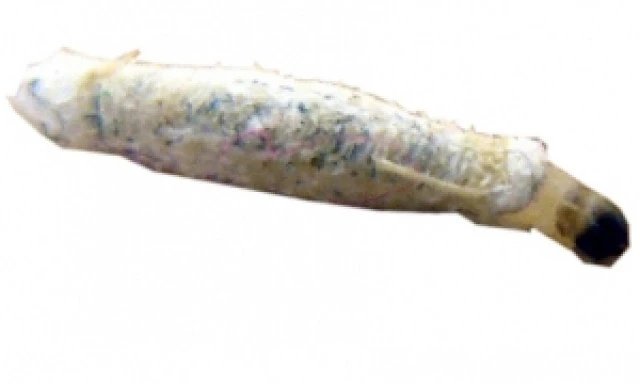
Case moth larvae destroy carpet and other fibrous material using it to cover themselves in a protective case of …
Learn More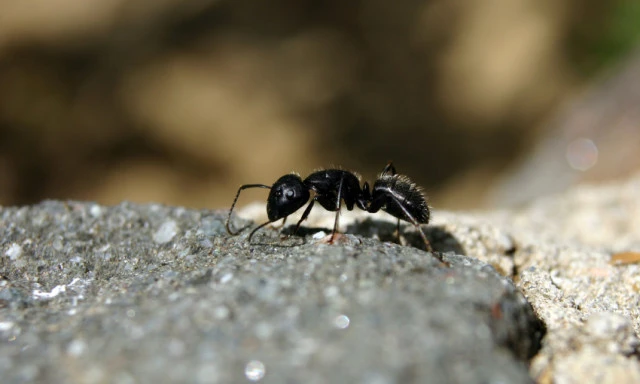
Ants are social insects that can be a considerable nuisance when they enter the home or vehicle, as they can be …
Learn More
Argentine Ants, pose particular difficulties but can be controlled by following the plan below. Different specie…
Learn More
For effective control of ant colonies and nests. A sugar–based liquid bait perfect for sugar feeding ants.

For control of ant numbers and nests with a high protein gel bait.

For easy and effective control of ants indoors and outdoors. Bait stations come with a liquid bait effective for…
"When they show their faces, we use your NO Ant paste (Gel) to get rid of them. The product is easy to use and is not offensive to the nose. Unfortunately, I don't know the species of ant we are using your product on. They are ordinary regular sized ants. I occasionally have problems with very tiny ants in our house (located in the same locale), and the product works wonders with them as well. The product is a good one with nothing to hide."
Sally, Nelson
 My Favourites (
 My Kiwicare
  Email
Email  Print
Print 