
Solve problems in and around your home.
Start Problem Solver


Spiders are a pest when they bite, produce unsightly webbing or cause fear in those with arachnophobia.
 Identify the problem
 There are many people with a fear of spiders. Nearly all spiders produce venom* but there are few spiders in New Zealand that can cause harm to humans. They include the white tail spider, the Australian Redback and the native Katipo.
Many spiders produce webs and webbing that can be unsightly around the eaves and gutters of houses or on fences and furniture.
*Only two spider families, Uloboridae and Holarchaeidae, are known to be non-venomous, i.e., lacking venom glands; however, their fangs can inflict infections spread through the skin, which in theory could represent more danger than from bites of non-lethal venomous spiders.
 How to solve the problem
 Crawling insects and spiders are effectively controlled by treating surfaces with residual insecticide. Insects and spiders that contact treated surfaces are rapidly killed and in many cases the surfaces become repellent to insects and so acts as a barrier to insect pests.
Inside
Outside
Note: Daddy Long Legs Spiders often cause problems by building untidy webs in the corners and on ceilings in the home. Their long legs and tiny bodies enable them to with stand walking on insecticide treated surfaces and can be more difficult to control for this reason. But direct spraying of the spiders or use of Kiwicare fumigators will control them.
 Did you know?
  Helpful tips
 For best results wash down surfaces to remove dust and dirt before spraying. Allow a couple of days for spiders to rebuild their webs then spray surfaces and webs. Leave for a further couple of days and then brush down webbing with a dry brush.

The bite of the Australian Redback spider is very painful and in very rare cases can be fatal if anti venom is n…
Learn More
Spider webs can be unsightly and collect dust and dirt both inside and outside the home.
Learn More
White tail spiders have been implicated in cases of ulceration or necrosis following spider bites.
Learn More
Odourless surface spray for effective and long–lasting control of spiders both indoors and outdoors.
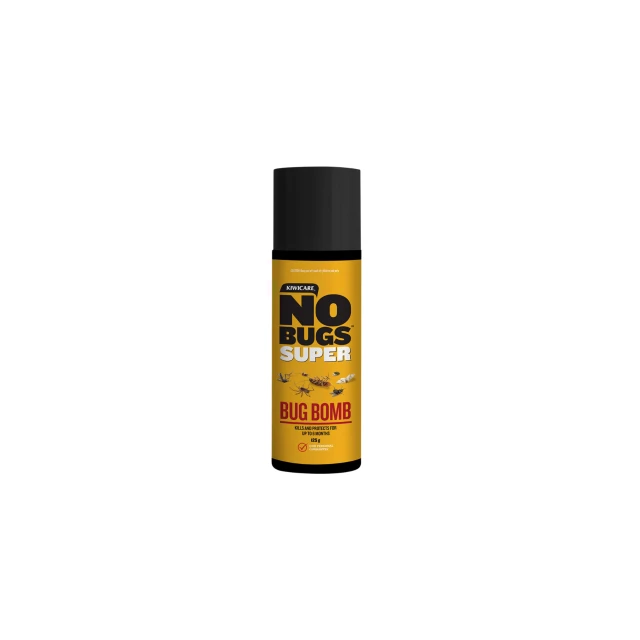
A long–lasting bug bomb that drives bugs out and kills any bugs that come into contact.

Effective long term control of up to 6 months for household insect pests indoors and outdoors.
"I used your NO Spiders last summer when I moved into my new house and was invaded with spiders. Your product worked a treat and I did not see one after that, ...I would recommend it to anyone with a spider problem."
Sharon, Dunedin
 My Favourites (
 My Kiwicare
  Email
Email  Print
Print 