• Stockists
  • Contact Us
  • Company
  • Home
      • Pest
      • Garden
  • Pest Problem Solver
  • Products
  • Pests
  • Pest Advice
close
Go to product page
Pest Guy

Pest Problem
Solver

These products deal with wasps

Bin Fresh Outdoors Custom BIN FRESH /assets/Uploads/Packshots/_resampled/SetWidth120-Bin-Fresh-Outdoors-Custom.jpg

Benefits

  • Controls flies & wasps in outdoor bins.
  • Great fresh fragrance.
  • 2 easy to use pads and each lasts upto 2 weeks.
  • Still works if wet.
Carbaryl Insect Control 100g CARBARYL INSECT CONTROL /assets/Uploads/Packshots/_resampled/SetWidth120-Carbaryl-Insect-Control-100g.png

Benefits

  • Controls wasps and their nests.
  • Quick and effective.
  • Powder keeps wasps calm.
  • Alternative to NO WASPS PUFF PACK.
No BugsSuper 250ml NO BUGS SUPER /assets/Uploads/Packshots/_resampled/SetWidth120-No-BugsSuper-250ml.png

Benefits

  • Professional strength, long lasting insect control.
  • Kills 99.9% common insect pests.
  • One spray protects surfaces for up to 4 months outdoors and 6 months indoors.
  • Sprayed surfaces are safe to children & pets.
250ml NoWasps NO WASPS /assets/Uploads/Packshots/_resampled/SetWidth120-250ml-NoWasps.png

Benefits

  • Quick & effective wasp control.
  • Use as a bait in situations where nest location in unknown.
  • Great to control wasps around decks and entertaining areas.
  • Spray on fences and to deter wasps from chewing timber.
NoWaspsInsectDust NO WASPS INSECTICIDAL DUST /assets/Uploads/Packshots/_resampled/SetWidth120-NoWaspsInsectDust.png

Benefits

  • Kills wasps and eliminates nests.
  • Quick & effective.
  • Puffer pack for application of powder to nest entrance.
  • Powder formulation helps to keep wasps calm during treatment.

Wasps on citrus 003

Kiwicare Pest » Pests » Q – Z » wasps

wasps

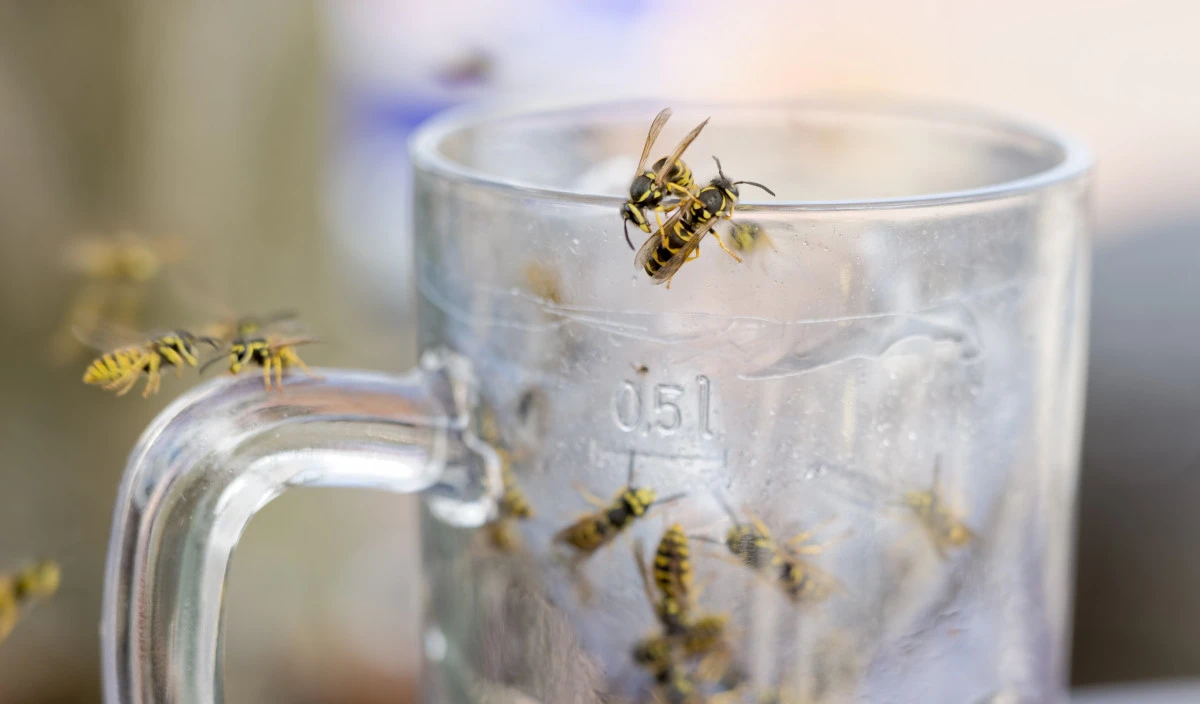
Pest wasps are the introduced social wasps, the German, common and asian paper wasps. Wasp nests can contain several thousand wasps each with a sting.


How to About Tips Related articles Gallery

HOW TO CONTROL WASPS

To get rid of wasps follow these steps:
Wasp Nests

The nests of wasps (and bees) generally have only one entrance/exit. If this can be identified the colony can be destroyed by sprinkling or puffing the apicide Kiwicare NO WASPS INSECTICIDAL DUST, CARBARYL INSECT CONTROL or MALDISON INSECT CONTROL powder into the entrance. The workers will then pick up the dust as they enter the nest and take it inside where it will kill larvae and queens.


Wasps, particularly Asian Paper Wasps, chew wood such as dead trees, decks, fences and stumps to make the 'paper' that they use to build their nests. Spraying such decaying wood with NO WASPS or NO BUGS SUPER can effectively control paper wasps and help to control German and Common wasps.


Note:
Great care should be taken in treating the entrance to a nest as there is a risk of being stung. It may be advisable to do this operation at night when there is no wasp or bee activity.

If the nest site cannot be found it is possible to reduce wasp numbers (and maybe kill a whole colony) using NO WASP CONCENTRATE mixed with a suitable bait such as sugar* or canned fish.

NO WASPS sprays are useful to treat around rubbish bins and other areas where wasps are attracted.

    *Caution: Where there is a risk of attracting bees to the bait, sugar and syrup baits should not be used. In such risk areas use canned fish, raw meat, carrion or fish skeletons as an attractant and spray with water based mix described above. Fix the bait inside an inverted can and suspend from a suitable tree. Respray every 2-3 days.

About

Pest wasps; German, common and the paper wasps, can be distinguished from bees by their shiny hairless bodies and distinct black and yellow stripes. Honey bees have much less distinct stripes of browns. Bumble bees are much larger, are rounded and have furry bodies.

The size of the nest will increase through the summer as more wasps are added to the colony. Nests reach their peak size in autumn and can be as large as a beach ball containing 3 to 5 thousand individuals. In New Zealand, conditions can be such that colonies do not die back during winter allowing more than the queen to survive. In this case the nests can grow over several seasons and become much larger.

The Asian Paper wasp forms much smaller colonies than the common or German and the nest will have only a few tens of cells in an open type nest. The Asian Paper wasp is consequently less of a direct threat to people. However, it is a threat to native insect species such as Monarch Butterflies on which it feeds. Many people will wish to control the paper wasps to protect their Monarchs.

Note:
Wasps and bees have a painful sting, to which some individuals are more susceptible than others; on rare occasions a sting can cause anaphylactic shock. For those not allergic to wasp or bee stings a sting on the throat or mouth can still be dangerous if the swelling blocks airways. On such occasions seek immediate medical advice immediately. Wasps or bees should not be tackled without a sound knowledge of the risks.


Bees are generally beneficial insects producing honey and pollinating our crops and flowers. However, occasionally a swarm will set up home in an inappropriate place such as the eaves of your house. In this case we strongly recommend that you contact a local beekeeper (see the National Beekeepers Association swarm collection contact list) who may try and collect the colony to use for honey production. Only if this is not possible should the colony be destroyed.
> If bees have been present for months or years at the nest site, there likely to be a honey store in the nest. Once the colony has been destroyed this honey must be removed or it will attract new swarms of bees or wasps.

  • Bug, Insect, Spider?
  • Mixing and Diluting Spray Concentrates
  • Other Risks from Bugs
  • Integrated Pest Management
  • Fair Weather for Pests

Tips

Although wasps poses a sting they do not use it unless they or their colony is under threat. Rapid movement can be regarded as threatening. So if a wasp or bee lands on you during application of Wasp Dust try and stay calm, it is likely to fly off again. Panicked waving and trying to get rid of wasps is only likely to induce the wasp to sting.

Wasps are not usually aggresive. But they seem to be more aggressive toewards the end of the season (autumn) and in muggy thunder-like weather. Avoid treating nests in such weather, it is usually advisable to wait until dark when wasps will not be active.

To kill wasps around rubbish bins and keep your bin smelling fresh use BINFRESH OUTDOORS.

Gallery

Beneficial honey bee pollinating flowers. Common wasp. Shiny yellow and black stripes. Wings held back over body. Hover fly, mimicing a wasp. Note wings held out from body. Hover flies are beneficial helping control many garden insect pests. Scale insects produce honeydew drops on the end of their hair-like anal tubes. Sooty mould grows on this sticky material and wasps feed on the honeydew.

About Kiwicare

We are Kiwis providing expert local solutions that keep your place pest free and your garden healthy.

Garden

Garden home Garden Problem Solver Products Pests Diseases Weeds Garden Health Organics

Company

About News Products Vacancies Useful Links Contact
Proudly made in NZ

© 2011 Kiwicare