My Favourites (
 My Kiwicare

 Email
Email  Print
Print Get Professional Rodent Control Results at Home
Rats and mice are smart, persistent and adaptable making them tough to get rid of. Once they find food and safety in your home, shed, or garden, they settle in fast, chewing through wiring, contaminating food, and spreading disease. Worse still, they breed rapidly with both rats and mice capable of having hundreds of babies a year if conditions are right. If you’re not proactively keeping on top of the problem, one small rodent can turn into a fully-fledged infestation before you know it. This is especially true during a Beech mast season, when rodent numbers can spike rapidly (and unfortunately no cat can keep up with that).
At Kiwicare, we know how tricky rodent control can be. We’ve spent years researching ways that you can tip the odds in your favour. Dual baiting is a method commonly used by professionals, that most home users aren’t aware of. This system allows them to stay one step ahead of rats and mice and achieve lasting control. In this article we walk you through what it is and how to do it at home.
What Is Dual Baiting?
Dual baiting is the process of alternating between different types of rodent bait (single-feed baits vs multi-feed baits) to improve your chances of success. Professionals use this technique to ensure rodents don’t become wary of a bait or resistant to its active ingredient. It’s a highly effective, long-term approach to keeping your rodent control programme working well all year round.
Different Types of Rodent Bait
Single-feed baits are designed so that a lethal dose can be consumed in one feed, with effects occurring several days later. Rodents may eat more bait before they die, but that doesn’t mean the initial lethal dose they consumed has not worked.
Multi-feed baits are designed to be eaten over multiple feeds and contain a lower dose per feed compared with single-feed baits. A rodent will need to eat the bait multiple times so that it can build up in its system enough for it to work. It typically takes 4 – 10 days of repeatedly feeding on the bait for it to start to have an effect.
Why Dual Baiting Works
- Prevents bait shyness:
Some rodents learn to avoid bait if they’ve seen others affected by it. Regularly swapping the baits makes it harder for them to connect the dots.
- Reduces resistance:
If the same rodent bait is relied on for long periods, its effectiveness can reduce over time. Alternating bait types helps avoid over-reliance on a single active ingredient. This becomes a major problem not only for you, but for wider New Zealand too. Regularly alternating between single-feed and multi-feed baits limits the chance of rodents developing resistance to a single active ingredient.
- Targets different feeding behaviours:
Some rodents prefer soft baits; others go for wax blocks. Switching bait types helps you catch both, ensuring no individuals or populations are left untreated.
- Used by professionals:
This technique is used by pest control professionals because it provides long-lasting and consistently good results.
How to Implement Dual Baiting at Home
- 1. Start with the right bait
If you’re tackling an active infestation, begin with NO Rats & Mice One Feed. This single-feed bait hits hard and fast. It’s a great way to nip rodent populations in the bud before breeding gets out of control.
- 2. Switch after two months
After about eight weeks, move to one of the following multi-feed baits; NO Rats & Mice Eliminator Bait Blocks, NO Rats & Mice Bait Blocks, or NO Mice Difend. All three products have different active ingredients. While NO Rats & Mice Eliminator Bait Blocks are technically a multi-feed bait, they require less feeds to build up in the system and take effect (so are more potent to rodents), but lower risk to non-target species, like pets, than single-feed baits.
- 3. Repeat the cycle
Alternate between different baits every couple of months to keep your rodent control program fresh and effective.
- 4. Use bait stations
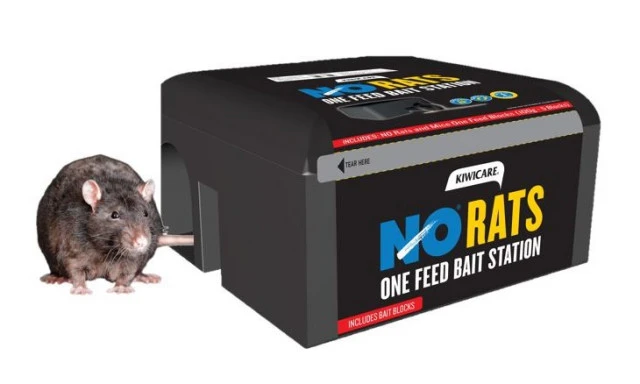
You must follow instructions on pack around keeping baits secured. You can secure baits by placing them inside Kiwicare bait stations to protect pets, wildlife, and children, while also keeping bait fresher for longer. These bait stations are easy to use, lockable and great for providing peace of mind. Rats and mice are also more likely to engage with fresh baits, than stale baits that have been exposed to the elements.
- 5. Combine with traps for best results
If you have a particularly large infestation, or a large area you need to cover e.g. a lifestyle block increase your chances of success by including rodent traps into your programme. They help catch surviving or bait-shy rodents and are great for monitoring when rodent activity has stopped. Read our Easy 1-2-3 Step Guide for Rodent Trapping if you want to make sure, you’re getting the most from your rat traps and mice traps.
Additional Tips for Rodent Control Success
- Inspect regularly
Check for droppings, chew marks, and nesting material and refresh bait as needed
- Keep your property clear of potential food sources:
Clear away and secure any possible food sources e.g. fruit from trees, dog food, food in your pantry etc. If there are less food options rats and mice are more likely to interact with baits and traps.
- Block entry points:
Once the problem is under control seal holes and gaps around pipes, vents, and under doors to prevent future rodent problems.
- Stay consistent:
Continue the dual baiting cycle even after activity drops, this prevents new rodents from moving in.
Do you have a larger than normal infestation
Here are a few signs, that you have a large infestation and should step up your baiting and trapping activities.
- Rodents are generally most active at night. If you’re seeing them during the day, it indicates there is more competition for food, and they need to be active during the day in order to find enough food to survive.
- If your bait is almost fully eaten when you check it, you have a large infestation on your hands. Keep in mind that even if you use a single feed product, it takes days for a bait to take effect so rats and mice will continue to eat your bait in the meantime.
- You’re seeing dead rodents, but bait still keeps getting eaten. Rodents have a feeding hierarchy, so dominant individuals may prevent subordinates feeding on baits. Only when the dominant individuals are dead can the subordinates begin feeding. What this means is that not all rodents will feed at once, and those that are waiting to feed can still breed.
Take Control the Smart Way
By using a dual baiting approach and trusted Kiwicare rodent control products, you’ll protect your home from rats and mice all year round, without letting them get wise to your tactics. Not only that, but you’ll be also helping to ensure NZ rodents don’t build up resistance to the rodenticides used to control their populations.
Visit your local retailer or explore the full Kiwicare range online to start your Dual Baiting program today.