My Favourites (
 My Kiwicare
 Email
Email  Print
Print Like all plants, lawn grasses need water to stay healthy and green. In warm and dry summer conditions, many lawns will quickly go brown if water is not applied to the lawn. To supplement natural rainfall many people will irrigate their lawn using an irrigation system, sprinklers, soaker hose or just a hose or watering can.
But there are some tips and tricks to adding water to your lawn so that you keep your lawn grass green and healthy.
- Irrigate deeply
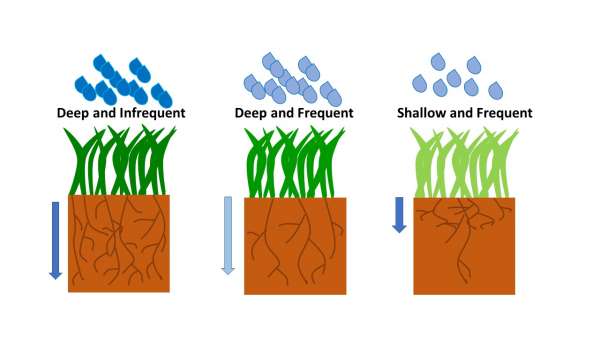
When irrigating, irrigate deeply. Water deep down in the soil is where it is most useful to grasses. Healthy lawn grasses will have roots going as deep as 15 – 60cm down in the soil. Water at that level encourages the grass to send its roots down in search of the water. If water is ONLY in the soil in the top 10cm that is where the roots will stay. Grasses with deep roots are more tolerant of drought. Shallow rooted grasses will brown off more quickly. - Measure your irrigation
If you are using a sprinkler system or sprinkler you can do something as simple as placing a bucket on the lawn and then measuring the depth of the water collected in the bucket. If you find 40 mm of water in the bucket you will know you have applied the equivalent of 40mm of rain; 40mm of rain or irrigation will soak soil to a depth of approximately 400mm (40cm) assuming no run–off. - Water infrequently
Water deeply and water infrequently. You might think "OK, if 40mm of water soaks down to the depths required, I will apply 10mm four times a week". Unfortunately, this will not soak down to 40cm because the first 10mm will soak down to 10cm, much of it will evaporate from the surface soil before the next 10mm is applied. The next 10mm may only add enough to soak a little further. Each time much of the water applied will evaporate off before the next application. The deeper the water the more slowly it will evaporate.
- Raise mowing height
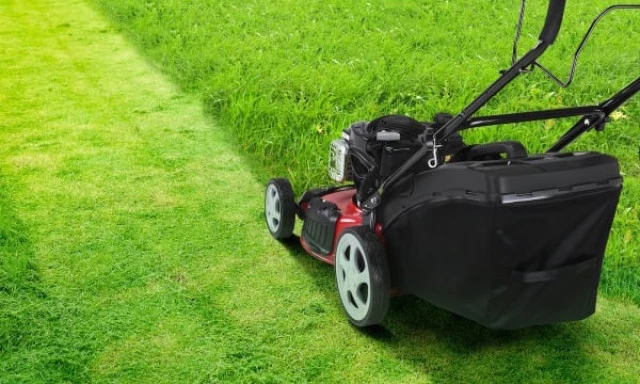
Don’t mow your lawn too short. Higher mowing height favours deeper root growth. Mowing short causes roots to stop growing and may cause the death of deeper roots. Short mowing may also expose the soil surface to sun and wind, increasing evaporation and stress on grasses. It also induces grasses to grow more quickly so it doesn’t save you time on mowing. - Irrigate in the morning
Water in the lawn soil is good, water on the grass leaves may be bad. Damp grass blades through the night risks development of fungal diseases such as red thread, Fusarium, Pythium and others. Irrigating in the cool of the morning reduces evaporation from the soil and allows the grass blades to dry through the day so they are not damp through the night. - Treat with a wetting agent
Treat your lawn with LawnPro Ultra Moisture Shield to increase water retention, prevent dry spots and facilitates the movement of water into the soil allowing for the even distribution of moisture, air, and nutrients in the rootzone. This product is suitable for all lawn species and is also compatible with herbicides, fertilisers, insecticides and fungicides.
If you irrigate your lawn with these tips in mind you will develop a deeply rooted healthy lawn that is able to resist drought and disease.